
TBG Methodology
Methodology for the analysis of risks and opportunities
To maintain clarity and flow in the main reports, the methodology used for identifying, assessing and prioritising risks and opportunities is presented separately in this section. This framework forms a fundamental part of our analytical process and ensures consistency, traceability and rigour in the conclusions reached in each study.
Risks and opportunities have been assessed using two variables: their impact on the company and their probability of occurrence.
The impact of the materialisation of a risk or opportunity on the company is measured with respect to the project objectives considering existing controls. The evaluation of impacts is divided into 5 levels and all impact focal points are evaluated, as more than one may be involved for the same risk. Below are shown the quantitative and qualitative ranges associated with each impact level.
Table 1. Quantitative criteria for classifying the impact of a risk or opportunity on the company.
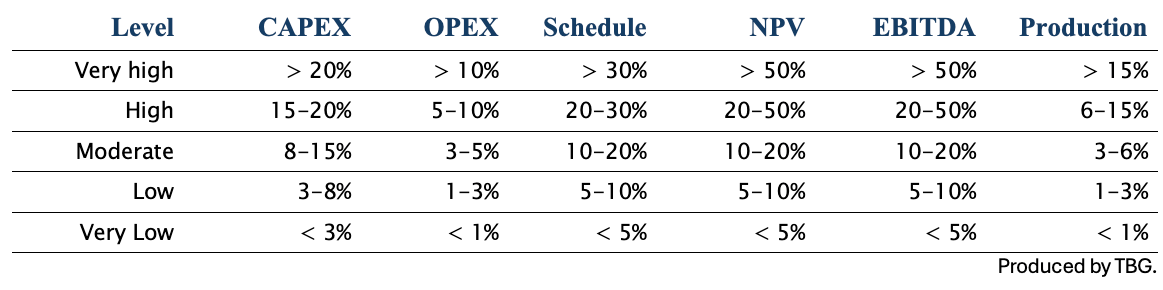
Table 2. Quantitative criteria for classifying the impact of a risk or opportunity on the company.
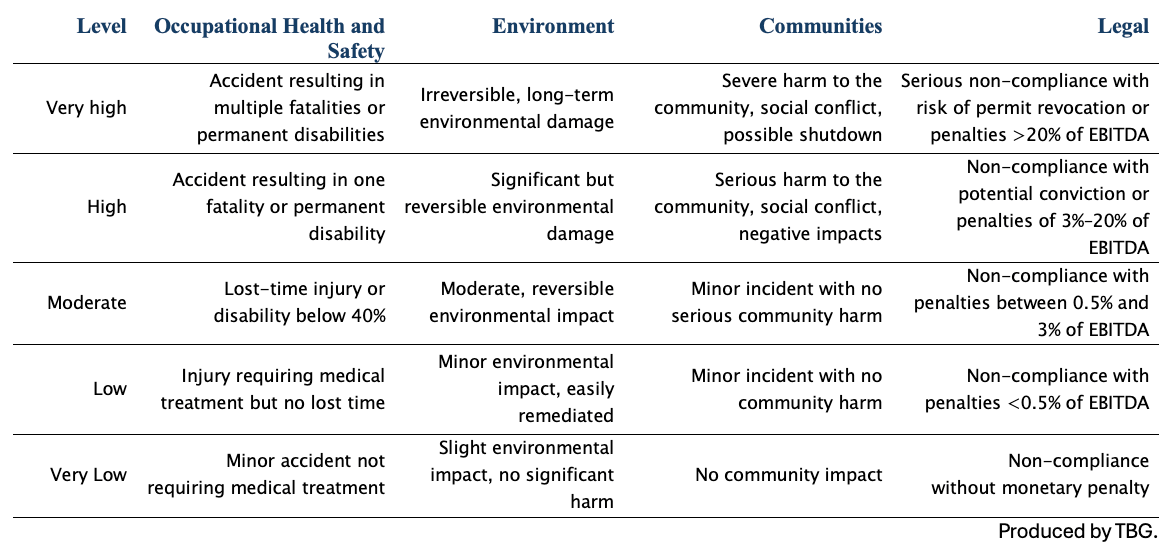
Likewise, the probability of occurrence determines the possibility that the event will occur in a given period of time, given existing controls. The probability will vary according to the effectiveness of existing controls and the baseline situation and is quantified using the criteria shown in table 3.
Table 3. Qualitative and quantitative criteria for classifying the probability of occurrence.
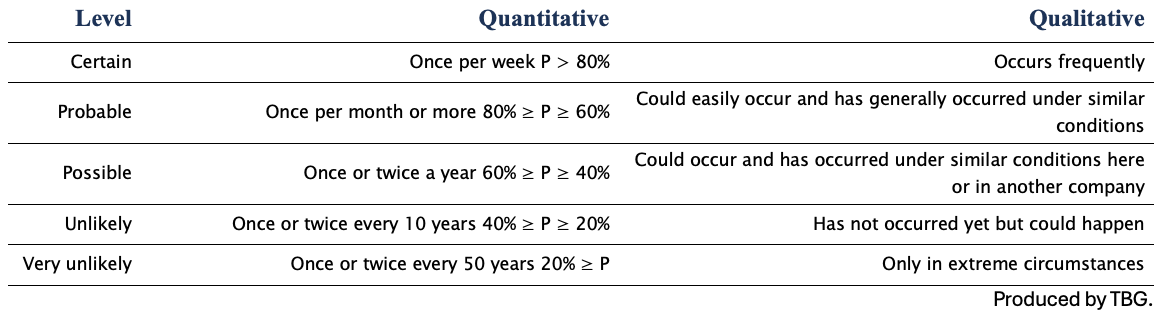
The product of the impact that a risk or opportunity can have on the company and the assigned probability of occurrence generates a numerical index between 1 and 25 for each identified risk or opportunity. These risks and opportunities are represented by their impact and probability coordinates (both on a scale of 1 to 5) on a colour map with the following colour scale:
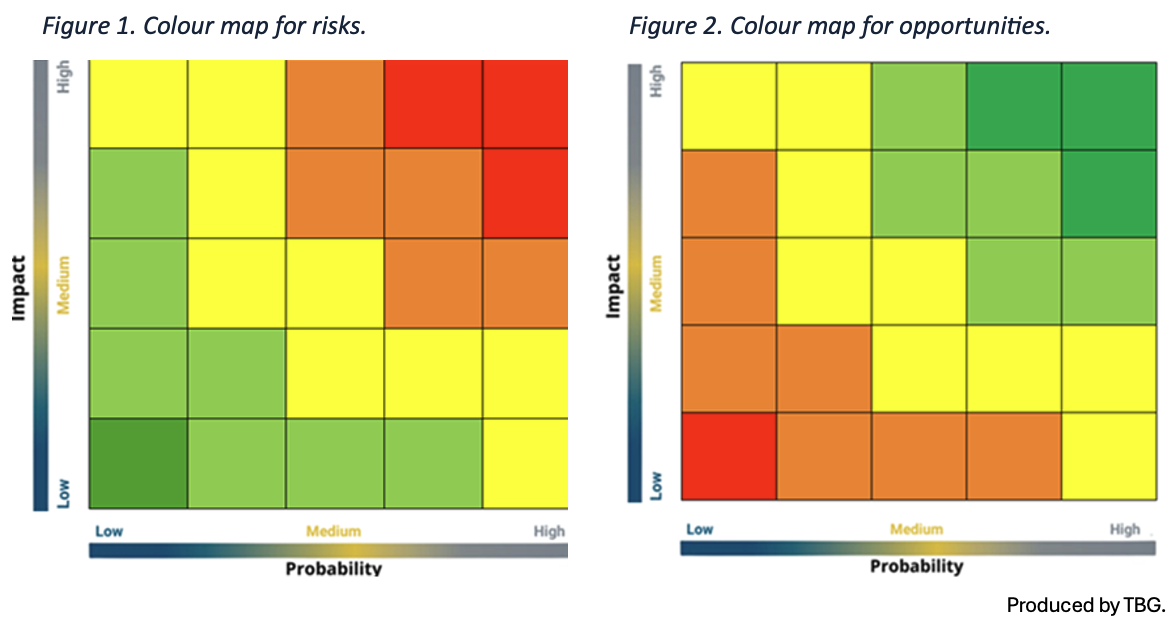
Risks with high impact and high probability of occurrence will be represented in the upper right margin of your colour map, falling in the orange or reddish zone. If, on the other hand, a risk has low probability of occurrence and low impact, it will be represented in the green band.
In opportunities, this scale is inverse.
Likewise, a colour scale has been defined at the discipline level. Each one of them (geology, mining, metallurgy, etc.) is represented with a tone whose reddish intensity increases as the aggregate risk index of that discipline is higher and vice versa.
Conversely, when evaluating the discipline in terms of opportunity, a range of greens is used, so that the greater the indices of its opportunities, the more intense the greenish tonality of the discipline will be in aggregate terms and vice versa.
Margin of Safety
Similarly, our investment philosophy, based on the concept of margin of safety, is set out in greater depth in this section, thereby avoiding disruption to the flow of the reports with cross-cutting methodological considerations.
This approach lies at the core of our investment analysis and should be understood as the framework within which the valuations presented in each study are interpreted. The concept of margin of safety, its underlying principles and its practical application within our analytical process are explained in detail below.
This concept is grounded in the recognition that, even with thorough analysis and high conviction in an investment, there is always the possibility of being wrong. Rather than basing decisions on uncertain upside potential (which inherently assumes the validity of the underlying assumptions) the value investing philosophy focuses on acquiring assets at a meaningful discount to their intrinsic value. In this way, even if estimates prove inaccurate, the gap between the price paid and the underlying value acts as a protective buffer.
This approach is closely aligned with one of the most widely recognised principles of investing: capital preservation, often summarised in Warren Buffett’s first rule, “do not lose money”. The margin of safety is defined as the difference between an asset’s intrinsic value and its market price. The wider this gap, the lower the risk of permanent capital loss and the greater the ability to absorb reasonable deviations from the initial assumptions. The objective is not to predict the future with precision, but to invest with a built-in margin for error that minimises downside risk while maximising the probability of achieving solid long-term returns.
The margin of safety is calculated as follows:

In practice, the required margin is not uniform, but depends on the quality of the asset, the robustness of the investment thesis and the degree of associated uncertainty. The greater the uncertainty, the greater the discount that should be required.
Having established these principles, the reader is equipped with the necessary framework to interpret the valuations and conclusions of the analyses, as well as to understand the criteria we apply when assessing different investment opportunities.